
When a company rolls out AI tools, a small number of people usually become very good with them and start producing a lot of work. The common concern is that everyone else is falling behind and should catch up. That concern is real, but it understates the problem. When a few people run well ahead of the operation around them, the work they produce enters processes and teams that are not set up to handle it. That tends to create problems.
What the fast users produce
These users have learned to set up agents that carry out multi-step work, and they generate output at a rate the rest of the organization is not used to. One person might have a set of agents that draft work orders and turn raw data into finished reports, producing in a day what a team used to produce in a week. On its own that looks like a straightforward gain. The difficulty is what happens to all of that output once it leaves the person who created it.
The problems this creates
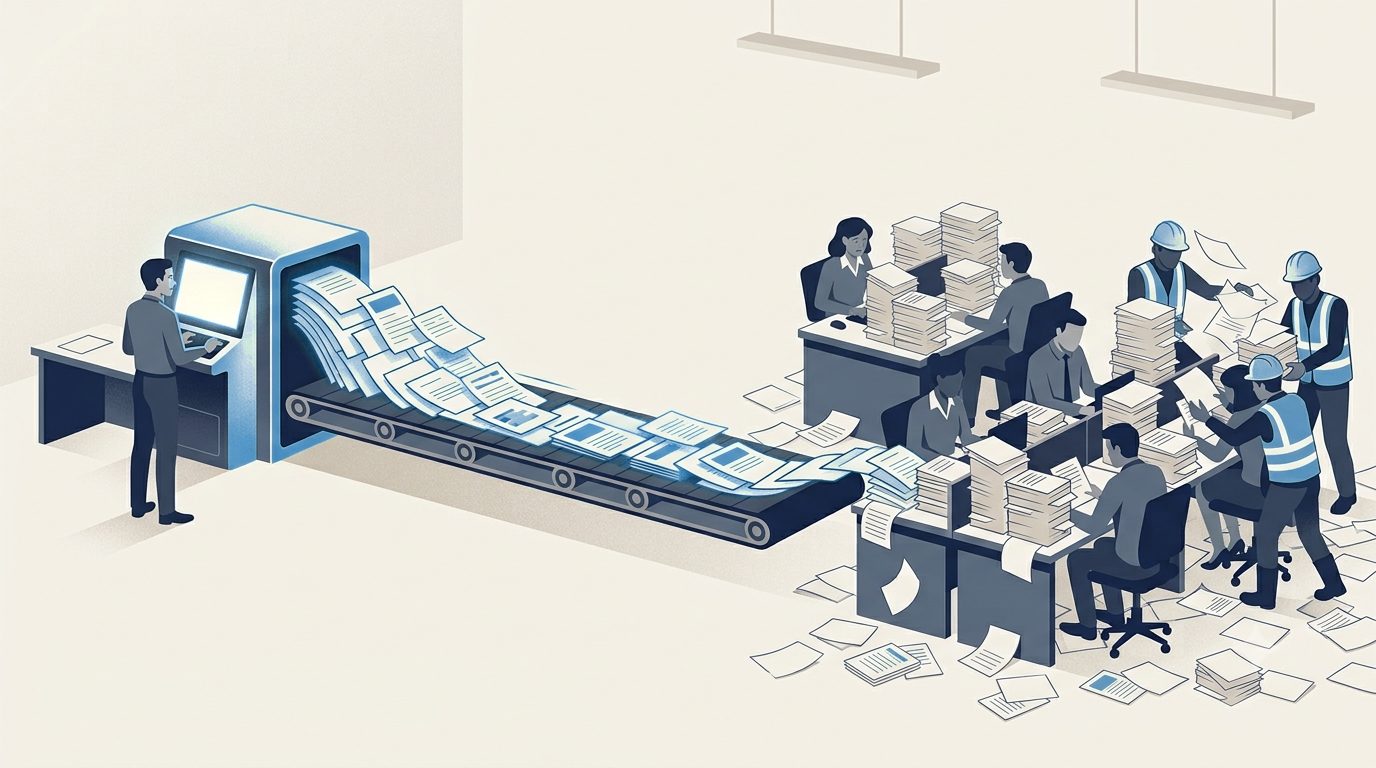
The overwhelmed operation: a single fast source floods a team that cannot keep pace, so work piles up and spills over.
The first problem is volume that no one downstream can check. If an agent drafts a hundred work orders, the planners who receive them cannot realistically review a hundred with the same care they gave to ten. In practice they either approve them with a lighter check, which lets errors through, or they set them aside, which means the effort was wasted and now sits between the two groups as friction.
The second problem is shared systems. When these automations write into data, spreadsheets, or reports that other people rely on, an error or an unannounced change moves straight into other people’s work. The people downstream often do not know the input was produced by a tool, so they may rely on it without the checking they would otherwise apply.
The third problem is parallel processes. A fast user frequently builds their own workflow alongside the official one, because that is quicker than getting the standard process changed. The result is two versions of a report or a dataset, and uncertainty across the group about which one is correct.
The fourth problem is dependence without understanding. Colleagues start relying on a person’s automated output without knowing how it was generated or where it can go wrong. Mistakes then get built into decisions, and because no one else understands the process, no one is positioned to catch them.
There is also the question of what happens when that person leaves. The automations are usually undocumented and understood only by their author. When they move on, the work can break, and in some cases the errors keep flowing while no one is able to trace where they come from. Once one of these situations becomes visible, the organization often concludes that AI does not work for them and pulls back, even though the cause was the gap between one fast contributor and a system that was not ready for the output.
Why this happens
Output from one person only becomes useful once the surrounding system can check it, fit it into existing work, keep it running, and act on it. When a single person works much faster than the process around them, the constraint does not disappear. It moves downstream, to the people and steps that now have to absorb more than they were built to handle. Extra speed at one point in an operation that is not ready for it does not carry through to the end. It backs up at those points, or it moves errors further down the line.
What this points to
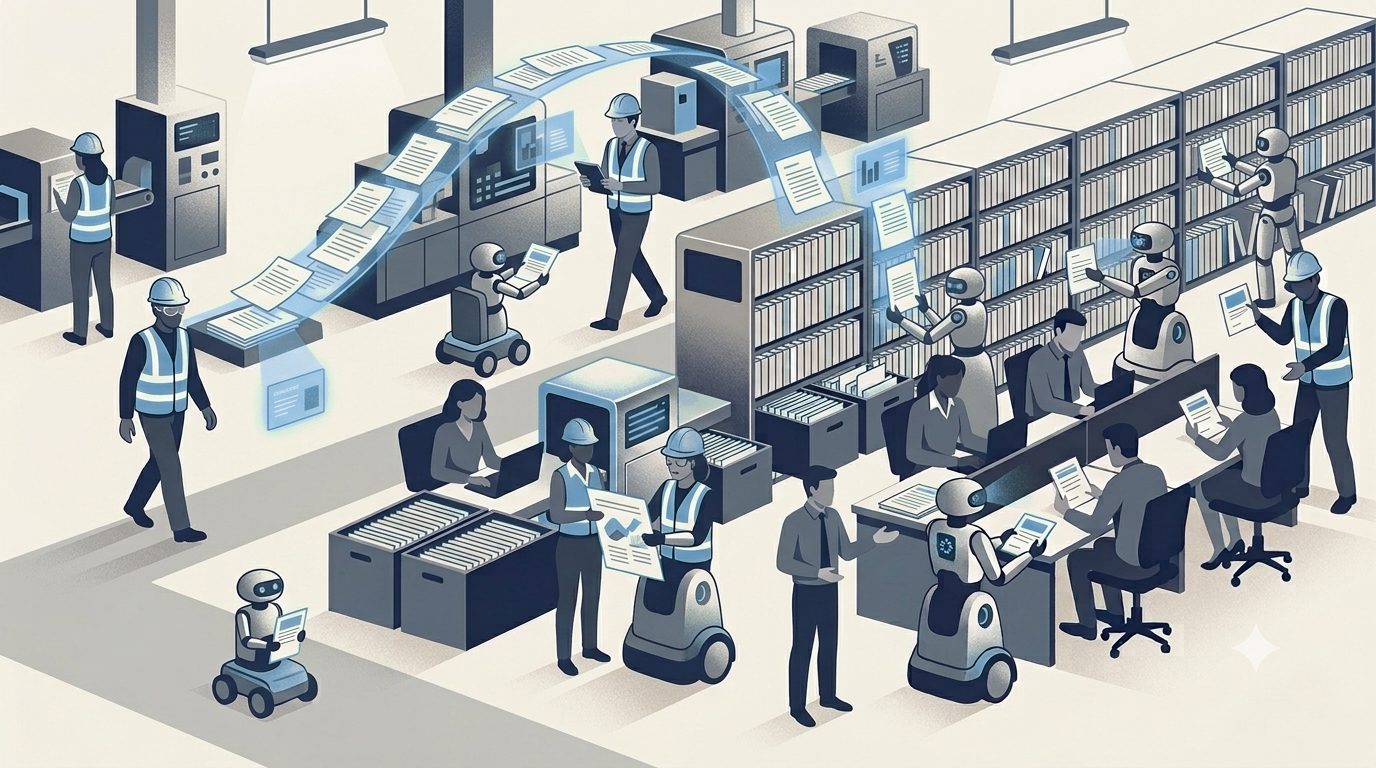
The ready operation: output streams into an organized central library, robots file and fetch it, and people stay focused on their work.
The useful goal is to raise the readiness of the operation as a whole, so that AI-assisted work can be absorbed without causing these problems. Part of that is bringing the wider team up to a level where they understand what the tools do and can work with the output. The rest is structural: verification that can keep pace with the higher volume of work, and automations that are documented and built into the real systems rather than run alongside them. The aim is to bring the rest of the operation up to the level that the fast users’ output already assumes.
Where this leaves an AI strategy
An AI strategy has to account for the whole operation’s ability to handle AI-assisted work, beyond the tools placed in individual hands. A capable person working on an operation that is not ready for their output can create as much rework as it saves. The value shows up when the surrounding system can take what they produce and use it safely.
This is one of two foundations an AI effort rests on. The other is the quality of the underlying asset and equipment data, which is covered in the asset data foundation for AI in maintenance and reliability.
This is the kind of problem 2E helps with. The work can include employee training, data and AI safety controls, governance infrastructure, source and audit requirements, custom harnesses and skills, agent dashboards, and the integration of AI-assisted work into the systems the organization already uses. An assessment starts with the people and processes that will receive the output, because that is where an apparently successful automation often creates its next constraint. If a few people are moving quickly with these tools and the rest of the operation is starting to feel the strain, that is a good point to begin.